
Radiating humanity.
With brief and unnecessary references to cyborgs, marmalade, and the hell of LinkedIn.

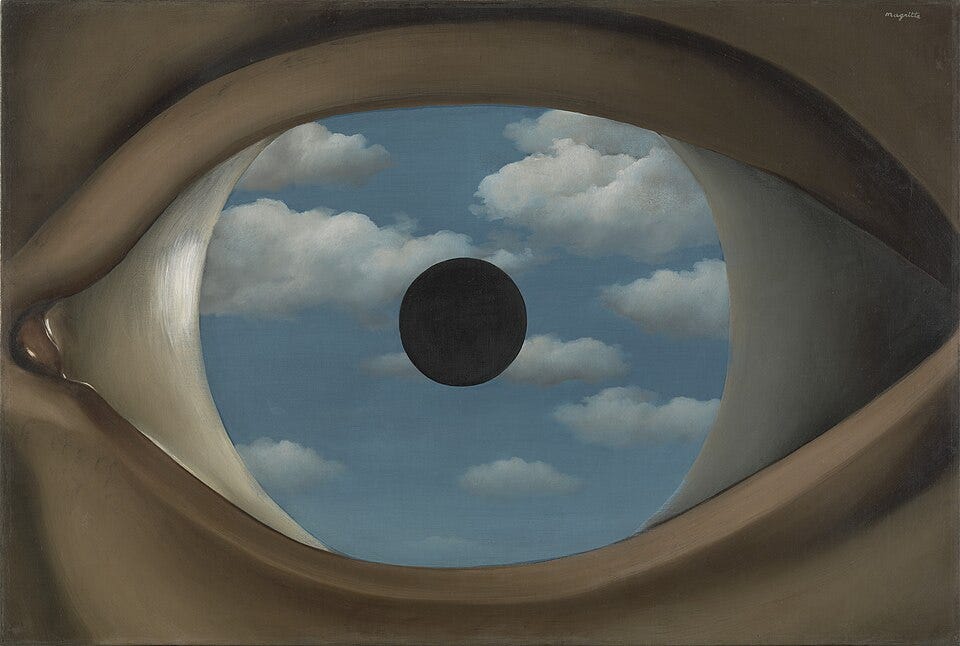
I took a law school class last semester in which we were tasked with writing a 20-page essay on an AI-related topic of our choosing. Then, once it’d been written (sans AI), we were to ask an LLM to edit it. “What”, the professor asked, “is the cyborg version of this paper?”
I wrote about people who fall in love with chatbots and, quite frankly, I should have known better. I was simply too interested. A week lost trying to define love, days spent reading about people who fall for objects. Ever a parody of myself.
But the thing got written. Deeply imperfect – doomed from the moment defining romance became a goal – but it was semi-cogent and made a semi-decent point and felt, as all long-enough papers do, like an intellectual feat.
I gave it to Claude and the precision with which it dissected the paper’s structural issues was what we’ve all come to expect from LLMs circa 2026. Yet this felt different. Why? Claude has analysed dozens of papers and brainstorms and (yes, fine) journal entries. I can only hypothesize that it was the sheer amount of time that went into producing the thing. Or maybe knowing how many more hours it would have taken me to diagnose the same problems. To remember I used to pride myself in being able to do this kind of analysis: my brain felt lossy and small.
I’ve long had this belief that, with enough skill and thought, any idea can be communicated perfectly. Explain your mistake, walk away God-like. Steal enough ideas to make them your own. Use your language, the song of the thing, to make the cups, and marmalade, and tea point, point to an overwhelming question. And the transcendence of earned grandeur, three syllables to put you beyond reproach. The hubris. Yes, chaos can be elevated, deciphered. No wonder it is as hard as breaking rocks.
And Claude enters. Produces the vision – dripping with AI-isms. It’s not this, it’s that. Suspiciously tight sentences. Identified so many times that calling them out seems to be an irresistible quirk of human expression. But where did these come from? Surely, these must once have been signs of skill, of thoughtful prose. To nail a contrast that wasn’t contrived, but that made you see the world differently. The em dash there to allow you to transcend the period comma binary – crucial for melody. AI slop is, if nothing else, punchy. And, before LLMs could do it for you, punch required a good writer, with a penchant for clarity and at least a smidge of creativity.
If intelligence is pattern recognition and you do not mind me stealing Claude’s favorite phrase: these ticks are a feature, not a bug. Patterns in our writing all along. But would I have seen them if LinkedIn hadn’t turned into its own circle of hell? Perhaps LLMs laid bare some of the most superficial mysteries of good writing. In doing so, they’ve made them unusable. So now, when I edit my own work, I look for these AI appropriations. Add commas and colons; lean into phrasing that borders on grammatical incoherence, try, try and find something new. Punchiness out, replaced with incongruence, so let me surprise you with this clause. Excessive cleverness, too much of an AI tell. Performance must be new.
Is this how Artaud felt every time he watched a play? The same disgust, contempt for the sheer predictability of the thing. Dialogue? But didn’t we do that already? Easy to imagine him asking (rhetorically, I’m sure, before pulling back the curtain on his own form with a flourish). His cruelty, the absurdism that followed. Zooming out so you too, could see the walls enclosing the open space in which you believed your mind to roam. Please, he seems to beg, think harder. Do something – anything – new.
But, of course, it is a race against time. To the extent that there is anything new under the sun, how long does it take for the discovery to become another appropriation? Does newness become the province of someone, something else? This edge of feeling – that these are the last years (months?) where good human writing will be distinguishable from that of an LLM. And even now, barely. Maybe not, when they can be prompted to abandon their appropriations and mimic the performance of my own.
And what of that, my own? All the writing tricks employed to radiate humanity, their transparency. I see the futility of wanting to escape a probability distribution, I assure you. My own desperate bids at self awareness, a pale imitation of Bo Burnham’s best work.
An LLM might stop here. Perhaps this is not an ending, but a beginning. The very fact that we care about our humanity suggests it cannot be replaced. Our belief in it is the point. Or something else hopeful and vague. But writing that law paper – the dimensions of my mind made visible. So god damn slow. Writing by myself as type-2 indulgence; the third floor of the mental gym we keep being told we are going to need.
What am I trying to tell you? That I am concerned about my own limits, how fast I can run to the edges of the LLMs’. That I do not want my own creativity exposed as a computationally cheap bag of tricks. And through it all, to slather my words with a precision that convinces you I deserve to walk away, unafraid. But from words, do I expect too much?